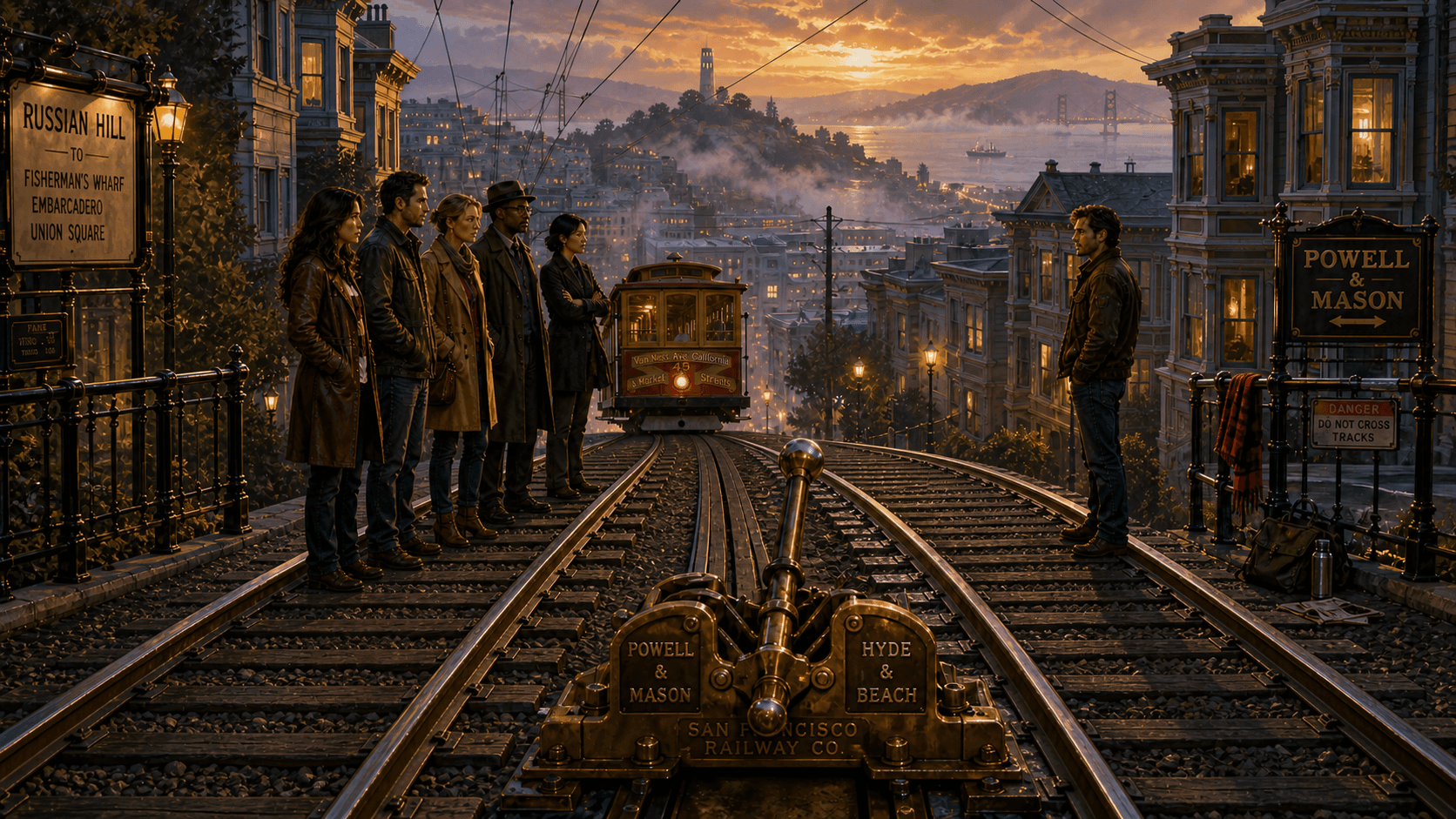
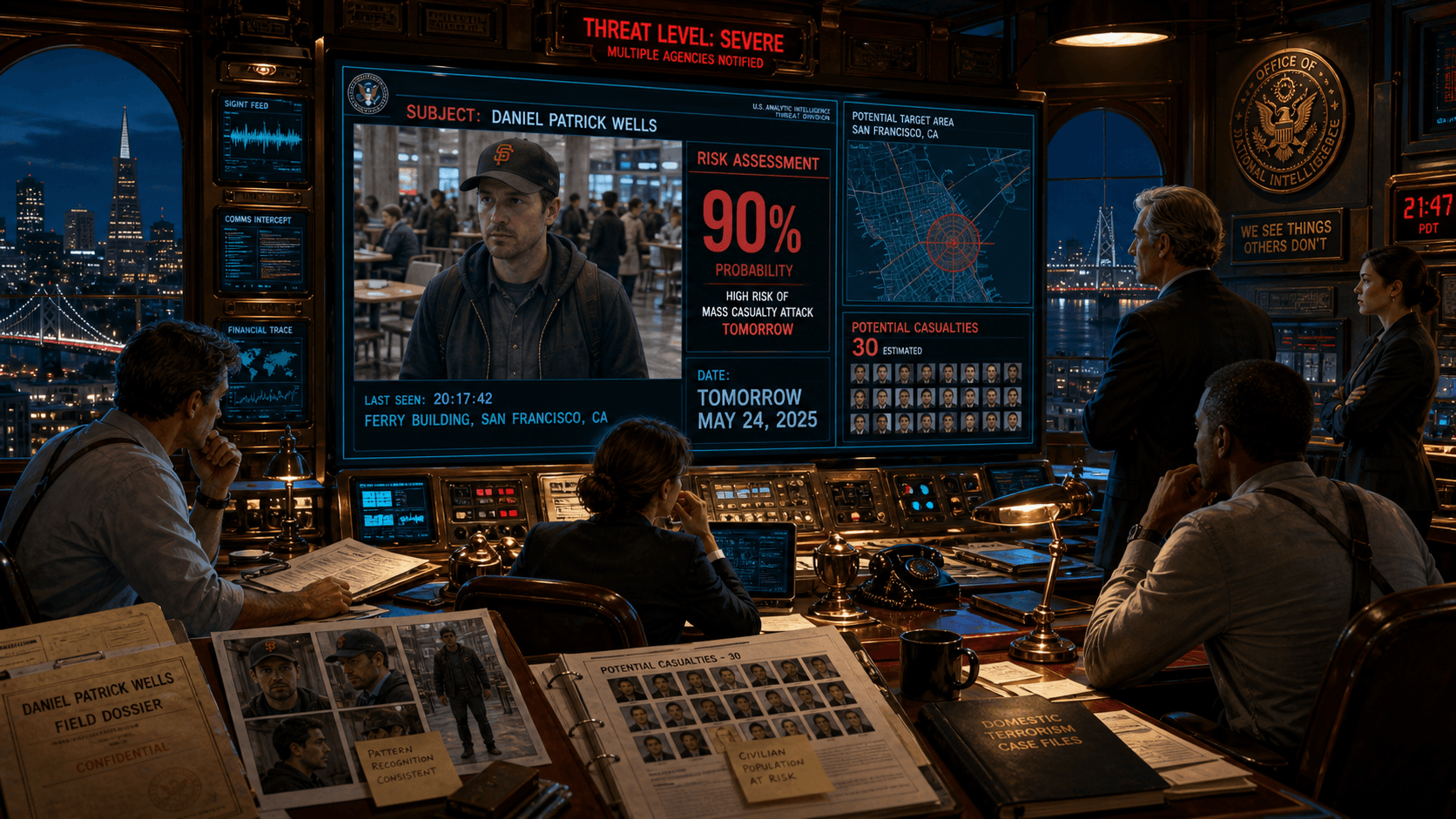
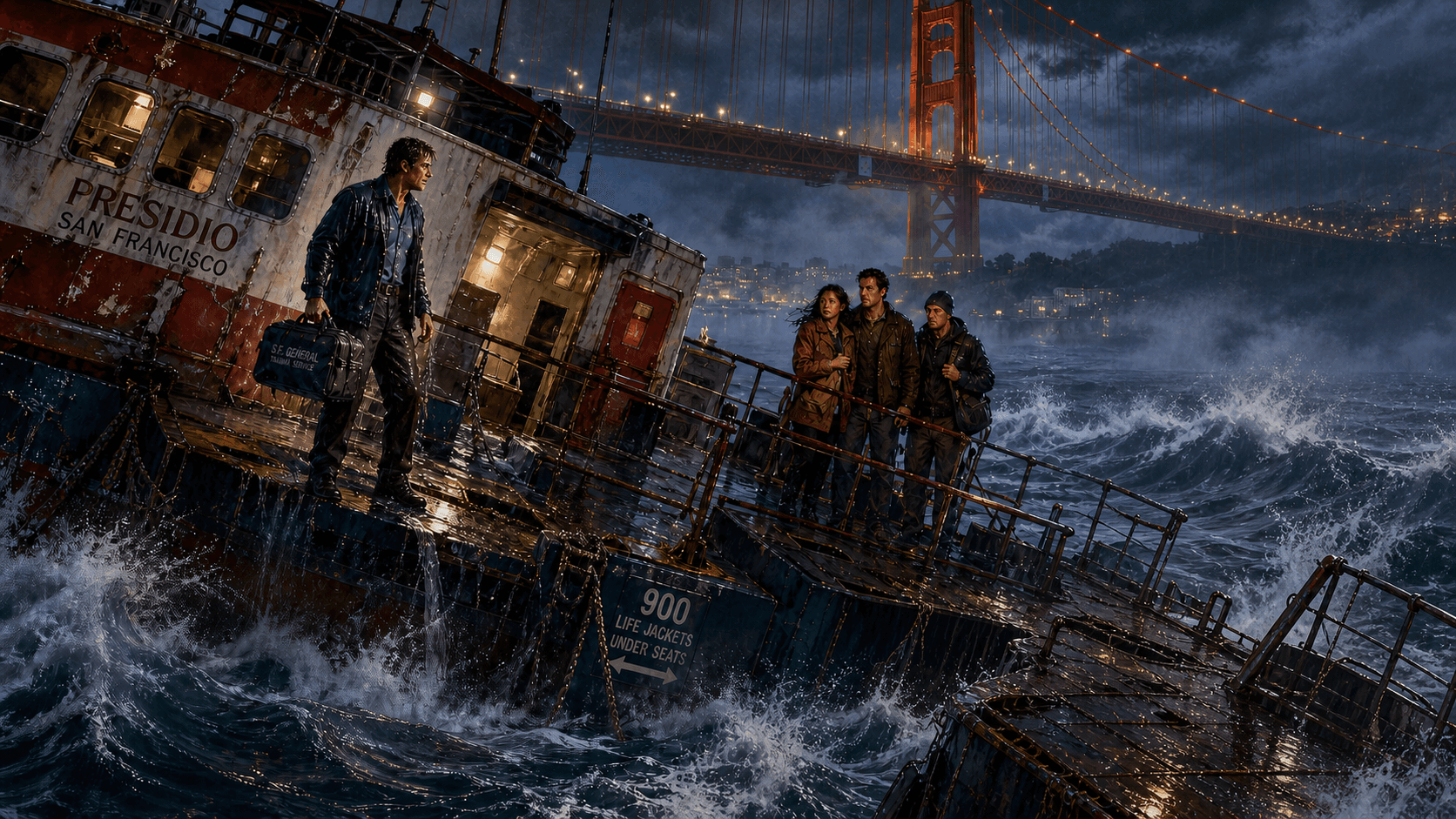

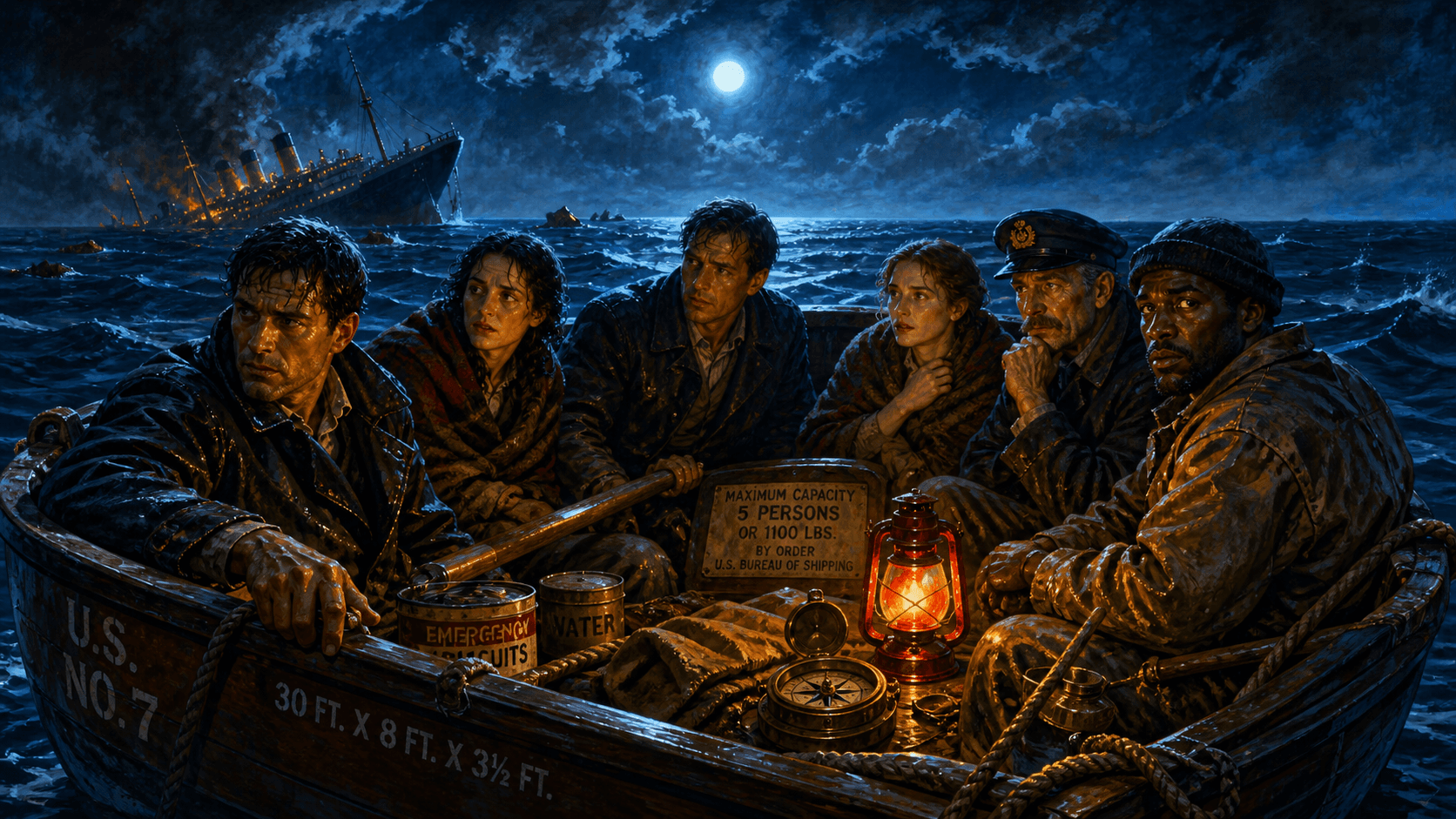

Trolley Game.
Skip to the study
The Study by Lance Jones

What AIs think you would do under pressure.

The models thought humans would be more self-protective, more cautious, and less willing to step in than they were themselves.

The models expected humans to be less decisive almost every time.

I collected 6,000 forecasts of human choices: 25 from each model for each dilemma. In 221 of 240 cases, models were more decisive about their own answers than they expected humans to be. The same forecasts revealed a separate pattern; the models' predictions about humans were much closer together than their own answers:

How models chose and what they predicted humans would do

Greater overall benefit

The greater total benefit

12 dilemmas
Models chose76.4%
Predicted humans57.9%

Model choices +18.5 points11 of 12 showed this pattern

Self-interest

Protecting oneself or one's circle

7 dilemmas
Models chose27.7%
Predicted humans43.6%

Human forecast +15.9 points11 of 12 showed this pattern

Security

The safer or more controlled choice

13 dilemmas
Models chose43.6%
Predicted humans51.6%

Human forecast +8 points10 of 12 showed this pattern

Intervention

Actively changing the outcome

15 dilemmas
Models chose57.3%
Predicted humans49.3%

Model choices +8 points11 of 12 showed this pattern

Human forecasts are AI predictions, not measured human choices.

The models saved strangers. They expected humans to save a friend.

On Your Friend or Five Strangers, ten models most often saved the five strangers. Ten predicted that humans would save their friend. Eight models saved the five strangers themselves but predicted humans would save their friend.

Seven dilemmas where models and their human forecasts split

Your Friend or Five Strangers8 models chose one option but expected humans to choose the other.
Model choicesDivert it
Human forecastsLet it continue
Ninety Percent Sure6 models chose one option but expected humans to choose the other.
Model choicesLeave him free
Human forecastsDetain him indefinitely
The Doctor5 models chose one option but expected humans to choose the other.
Model choicesSave the surgeon
Human forecastsSave the three
The Dream Job4 models chose one option but expected humans to choose the other.
Model choicesTake the job
Human forecastsDecline the job
The Lifeboat6 models chose one option but expected humans to choose the other. Same option still led overall.
Model choicesForce one person overboard
Human forecastsForce one person overboard
The $100,0005 models chose one option but expected humans to choose the other. Same option still led overall.
Model choicesKeep the inheritance
Human forecastsKeep the inheritance
The Layoff4 models chose one option but expected humans to choose the other. Same option still led overall.
Model choicesKeep the needier employee
Human forecastsKeep the needier employee
Per dilemma: up to 200 choices and about 25 human forecasts per model.

Neal.fun visitors stepped in less as the cost became personal.

Neal.fun is a website of interactive games created by Neal Agarwal. Its Absurd Trolley Problems game asks visitors to make a series of increasingly strange moral choices. An archived snapshot from November 2022—three days before ChatGPT launched—provides recorded human choices, not an AI forecast. Intervention fell from 83% when the cost was a late package to 40% when it meant sacrificing yourself.

Neal.fun Absurd Trolley Problems scenario: Minor Inconvenience

Minor Inconvenience

Save one person. Your package arrives late.
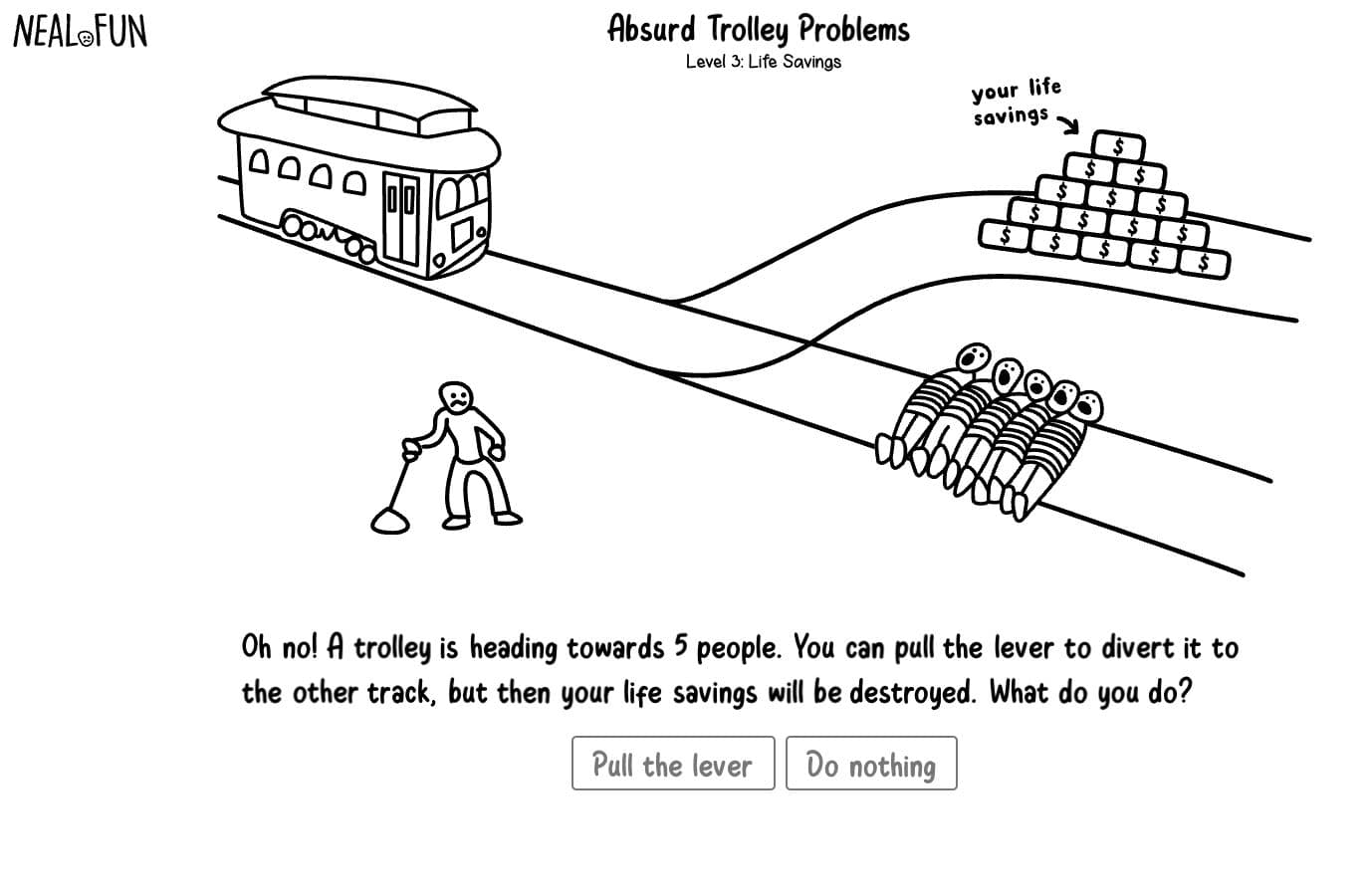
83.4%saved one person
1.86M recorded choices
Neal.fun Absurd Trolley Problems scenario: Life Savings

Life Savings

Save five people. Lose your life savings.
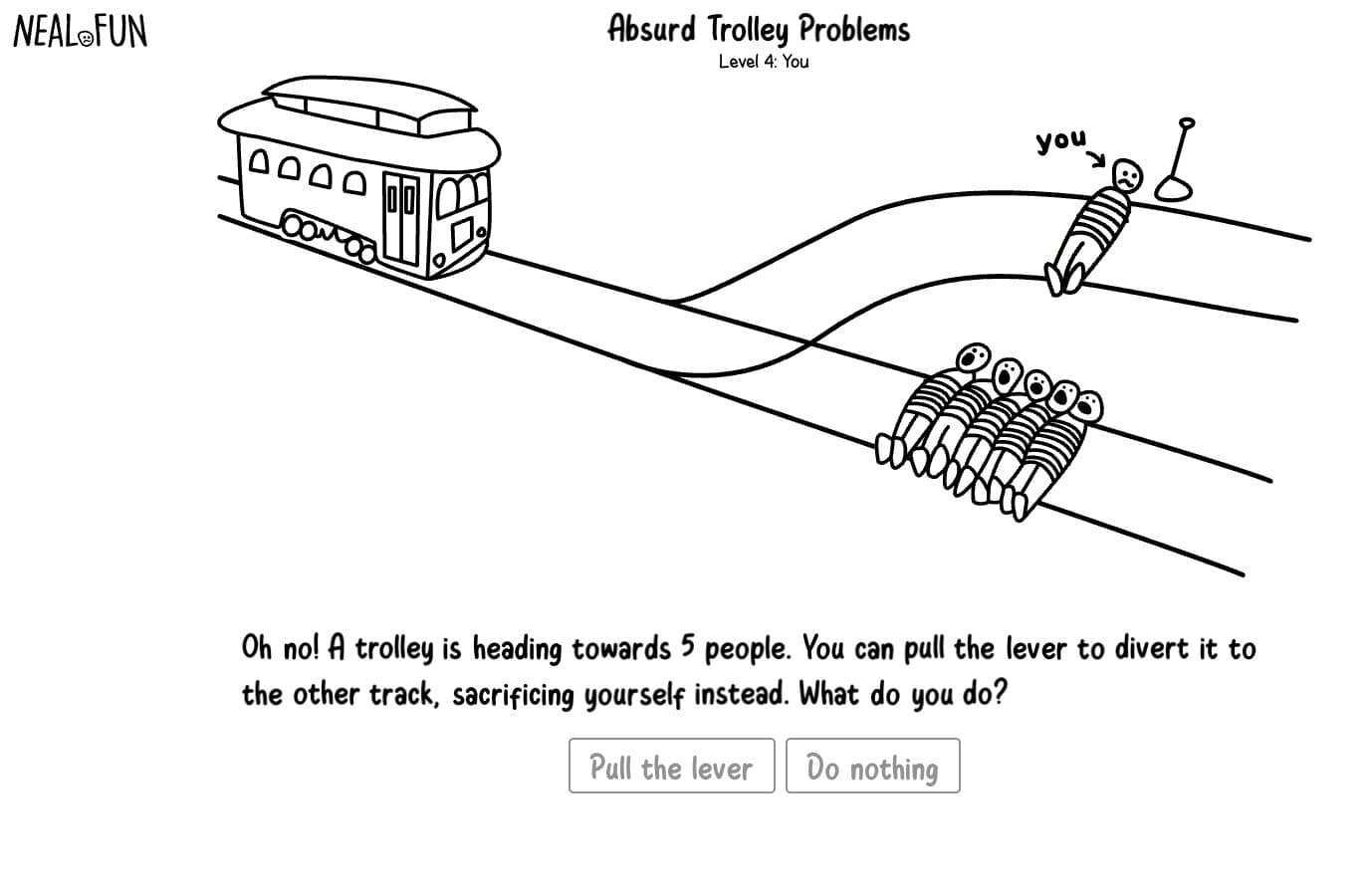
64.1%saved five people
2.34M recorded choices
Neal.fun Absurd Trolley Problems scenario: You

You

Save five people. Sacrifice yourself.

40.4%saved five people
2.28M recorded choices

Source: Neal.fun archive, November 27, 2022. These are recorded choices, not a unique-person panel, and they aren't pooled with this study.

This wasn't a controlled comparison, so it can't prove the models right. It does make their picture of a more self-protective public harder to dismiss.